How Copper Density Affects Your Material Cost Calculations
When working with copper, mistakes rarely come from pricing alone. They usually come from weight. Copper is heavy, and the mere fact of that affects your raw material costs, job quotes and waste disposal. Unless you pay attention to density or consider copper to be a light metal, you will be mistaken from the beginning. This article explains how copper density directly affects material cost and how to avoid common calculation errors.
Density Is the Starting Point for Cost
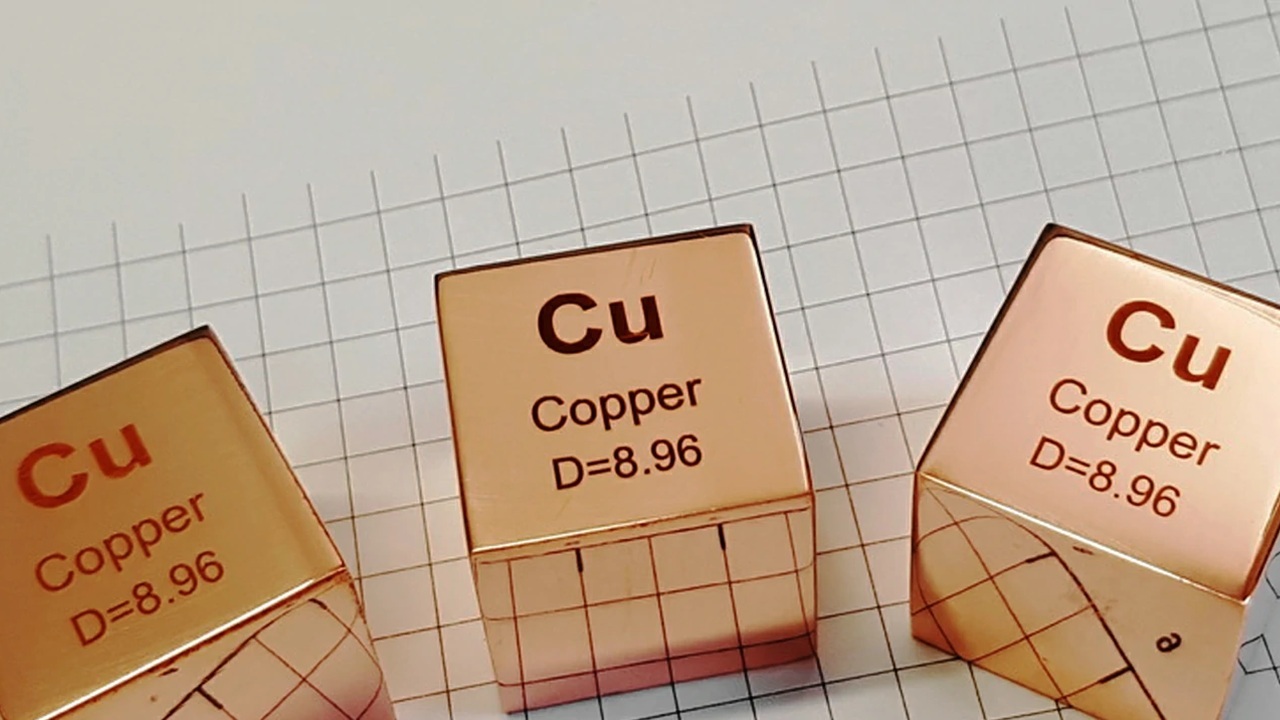
Copper has a density of 8.96 g/cm³. That number defines how much material is contained within a given volume. Since suppliers sell copper by weight, not by size, density serves as the basis for all cost calculations. If your volume estimate is correct but your density assumption is wrong, your cost estimate fails immediately.
Volume Alone Means Nothing Without Density
A sheet that looks small can still be expensive if it is dense. Copper proves this quickly. Two parts with the same dimensions but made from different metals will not cost the same. Copper will almost always cost more simply because it packs more mass into the same space. At ShincoFab, this is accounted for early during quoting so that no job is underpriced due to size-based assumptions.
Why Copper Costs Add Up Faster
Copper is extremely dense, such that an additional millimeter of thickness adds a lot of weight. Any minimal change in the thickness will move a project to the next price range. This is particularly evident in busbars, enclosures and heavy-duty parts where they cannot afford to compromise on the thickness.
Thickness Has a Bigger Impact Than You Think
The designers may work on length and width without considering the thickness. Thickness is a major influence on the final weight of copper. Doubling thickness does not just double cost in some cases; it can also increase machining time and tool wear. That combination makes density a direct driver of both material and processing expenses.
Cost Errors During Quoting
One of the most common mistakes is estimating cost based on surface area instead of volume. This works for lightweight materials but fails with copper. Shops that skip density-based calculations often end up absorbing the difference later. ShincoFab avoids this by tying every quote to a calculated weight rather than visual size.
Scrap Loss Is Not Cheap with Copper
Material waste is more evident with copper due to its density. A small offcut still carries noticeable weight and value. If scrap is not tracked properly, cost recovery becomes difficult. Even minor inefficiencies in nesting or cutting layouts can lead to measurable financial loss over time.
Density Helps Verify Supplier Pricing
Density can also help to determine whether you are getting the correct price for what you are getting. When a batch of copper weighs below the expected weight for its size, it may not be pure or may contain undesired elements. This impacts cost and performance. Shops like ShincoFab use weight checks against volume to confirm material quality before production begins.
Freight Costs Depend on Density Too
Shipping is another area where copper density affects cost. Freight companies charge by weight, and copper can reach high weights quickly, even in compact packaging. A small crate can become expensive to ship if it contains dense copper parts. Accurate weight calculations help prevent unexpected logistics costs.
Density and Machining Cost Connection
Dense materials require more effort to process. Cutting, bending, and handling copper require more energy and stronger tooling than lighter metals. While density itself does not directly set machining costs, it influences the forces involved, which increase wear and operating expenses. This is factored into ShincoFab’s production planning when handling thick copper sheets.
Small Miscalculations Multiply Quickly
A minor mistake in density-based weight calculation may seem harmless on a single part. However, when multiplied across hundreds or thousands of units, the financial impact becomes serious. Even a small percentage error can lead to large cost gaps in bulk production.
Alloy Differences Change the Numbers
Not all copper materials have the same density. Brass and bronze are slightly lighter due to the addition of elements. If you assume the pure copper density for an alloy, your cost estimate will be higher than the actual cost. On the other hand, treating pure copper as an alloy can lead to underpricing. Correct identification of material type is necessary for accurate costing.
Density-Based Costing Improves Planning
Cost estimation is more predictable when density is used effectively. Ordering of materials is accurate, there is less waste, and pricing remains constant. This helps to minimize surprises in production and maintain margins.
Conclusion
Copper density is not only a technical aspect. It directly influences the cost of the material, the price of your work, and the efficiency of your operation. Neglecting it results in underpricing, wastage and unforeseen expenses. Using it correctly keeps your calculations grounded in reality. That 8.96 g/cm³ should always be a part of your calculation, whether you are writing a part design, an order sheet or planning a shipment.